
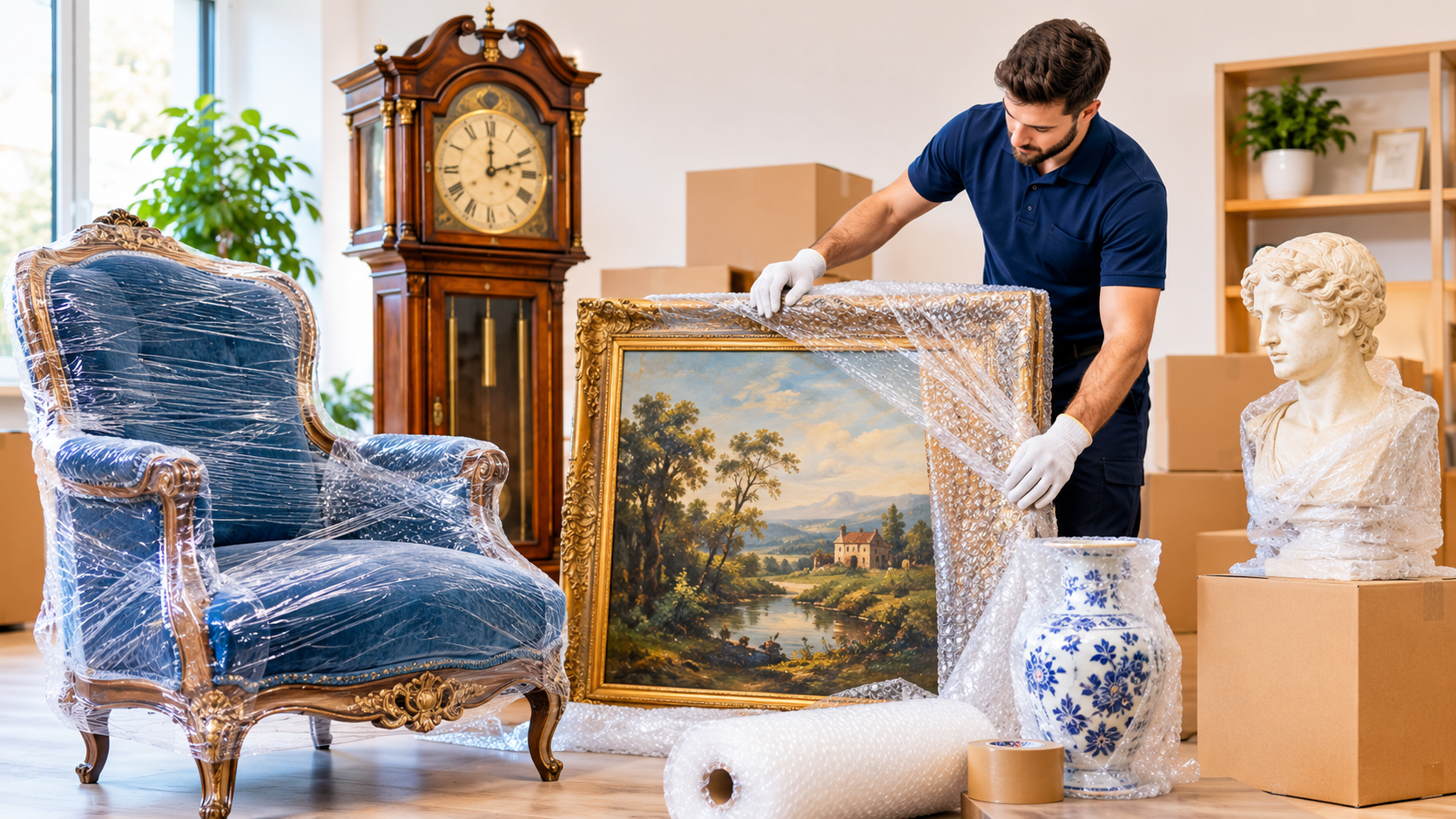
1. Identify Valuable Items Before Moving Day
The first step is to identify which belongings need additional attention. Not every item can be packed using the same materials or handling methods. Walk through your property and make a separate list of valuable or delicate belongings, including:-
Antique wooden cabinets and wardrobes
-
Vintage tables and chairs
-
Glass display cabinets
-
Paintings and framed photographs
-
Sculptures and decorative pieces
-
Antique mirrors
-
Valuable clocks and collectibles
-
Designer and handcrafted furniture
2. Use the Right Packing Materials for Antiques
Antique furniture can be more delicate than modern furniture because of its age, construction and existing condition. Traditional finishes, decorative details and older joints may be vulnerable to pressure or rough handling. Using suitable protective materials helps reduce the risk of damage. Some useful packing materials include:-
Furniture blankets for surface protection
-
Bubble wrap for suitable protective applications
-
Acid-free tissue paper for sensitive surfaces
-
Strong packing boxes for smaller accessories
-
Corner protectors for vulnerable edges
-
Protective wrapping for decorative details
3. Protect Paintings and Artwork During Transportation
Artwork requires special attention because different materials have different protection requirements. Oil paintings, canvas artwork, framed photographs and glass-covered pictures should not all be packed in exactly the same way. Here are some practical precautions: Use suitable protective coverings: Choose materials that will not stick to or react with the artwork’s surface. Protect the corners: Framed artwork can be vulnerable around its edges and corners. Use appropriate corner protection. Use correctly sized boxes: Artwork should fit securely without excessive movement inside the packaging. Keep paintings upright where appropriate: Follow the artwork’s handling requirements and avoid placing heavy objects on top of framed pieces. Label packages clearly: Mark boxes as fragile and identify the correct handling orientation. For large paintings, valuable collections or delicate sculptures, professional packing advice is recommended before transportation.4. Handle Valuable Furniture Carefully
Expensive furniture can be damaged through incorrect lifting, dragging or placing items on unsuitable surfaces. Before moving large furniture, check its size, weight, construction and condition. Identify loose fittings, glass sections, removable shelves and decorative components. Follow these precautions:-
Empty drawers, cabinets and wardrobes before moving them.
-
Remove detachable shelves and glass components where appropriate.
-
Protect corners, handles and decorative edges.
-
Avoid dragging furniture across floors.
-
Use suitable lifting equipment for heavy pieces.
-
Keep removable fittings together and clearly labelled.
-
Secure furniture properly inside the removal vehicle.
5. Choose Professional Packing Services for Fragile Belongings
Packing valuable belongings yourself can be challenging, particularly when you have several delicate items to transport. Professional packing support can help reduce the risk of incorrect wrapping, insufficient cushioning and unsuitable packaging. A suitable packing plan should consider:-
The material and condition of each item
-
The item’s size, shape and weight
-
Whether it contains glass or other fragile components
-
The distance involved in transportation
-
The type of protective packaging required
-
Whether additional handling precautions are necessary
6. Plan the Transportation of High-Value Items
Packing is only one part of protecting valuable belongings. How items are loaded, positioned and secured during transportation is equally important. Before moving day, consider the following:-
Check whether large items can pass through the property’s access points.
-
Plan the loading order for delicate and heavy belongings.
-
Keep fragile items separate from heavy objects.
-
Make sure items are secured to prevent unnecessary movement.
-
Avoid placing heavy furniture on top of delicate belongings.
-
Confirm the delivery arrangements before transportation.
7. Consider Insurance and Documentation Before the Move
Valuable furniture and artwork may have a significant financial or sentimental value. It is important to understand the protection available before arranging transportation. Before booking a removal company, ask about:-
Goods in transit insurance
-
Public liability insurance
-
Policy limits and exclusions
-
Conditions for high-value belongings
-
Whether individual items need to be declared
-
The process for reporting damage
8. Prepare a Separate Inventory for Antiques and Artwork
Creating an inventory helps you keep track of valuable belongings throughout the relocation. Record the following information for each item:9. Plan for Temporary Storage When Necessary
Sometimes, your new property may not be ready to receive all your belongings immediately. Renovation work, delayed completion dates or other arrangements can create a gap between moving out and moving in. In these situations, temporary storage may be useful. However, valuable furniture, antiques and artwork should be assessed before being placed into storage. Consider the following:-
Ensure items are properly packed before storage.
-
Keep fragile belongings clearly identified.
-
Avoid placing heavy items on delicate furniture.
-
Keep an inventory of stored belongings.
-
Confirm suitable storage arrangements for sensitive items.
-
Check the storage conditions required for specific artwork or antiques.
10. Inspect Valuable Belongings After Delivery
Once your belongings reach the new property, inspect them before completing the move. Compare each item with your original photographs and inventory. Check furniture surfaces, corners, frames, glass sections and decorative details. If you notice any damage or missing components, report the issue to the removal company promptly and follow its claims procedure. After inspection, place each item in its intended location. Allow valuable artwork and antique furniture to adjust to the new environment where necessary, following appropriate conservation advice. Taking time to inspect everything helps ensure that your valuable possessions are accounted for after the move.Why Choose Alpha Removals for Moving Valuable Belongings?
Moving antiques, artwork and valuable furniture requires careful planning, suitable packing and responsible handling. Alpha Removals supports residential and commercial relocations across Croydon, South London, London and Surrey. We understand that different belongings require different levels of attention, particularly when a move includes delicate or higher-value items. Our removal services can include:-
House and flat removals
-
Professional packing and unpacking
-
Fragile item packing
-
Furniture dismantling and reassembly
-
Furniture protection during transportation
-
Storage solutions
-
Written removal quotations
Frequently Asked Questions (FAQs)
The safest approach is to assess each antique individually, use suitable protective materials, avoid unnecessary handling and secure items properly during transportation. Particularly delicate antiques may require advice from a professional conservator.
Paintings should be protected using suitable non-abrasive materials, corner protection and appropriately sized packaging. Valuable artwork may require specialist packing depending on its size, material and condition.
Yes. A professional removal company can help move valuable furniture by planning suitable lifting, protective wrapping, loading and transportation arrangements.
Yes. Antique furniture may require furniture blankets, suitable protective coverings and non-damaging materials. The correct choice depends on the furniture’s finish and condition.
You should check your existing home insurance and the removal company’s goods in transit policy. Confirm whether high-value items are covered, including any exclusions and declaration requirements.
The safest approach is to assess each antique individually, use suitable protective materials, avoid unnecessary handling and secure items properly during transportation. Particularly delicate antiques may require advice from a professional conservator.
\u00a0"}},{"@type":"Question","name":"2. How should paintings be packed for a house move?","acceptedAnswer":{"@type":"Answer","text":"
Paintings should be protected using suitable non-abrasive materials, corner protection and appropriately sized packaging. Valuable artwork may require specialist packing depending on its size, material and condition.
\u00a0"}},{"@type":"Question","name":"3. Can a removal company move valuable furniture?","acceptedAnswer":{"@type":"Answer","text":"
Yes. A professional removal company can help move valuable furniture by planning suitable lifting, protective wrapping, loading and transportation arrangements.
\u00a0"}},{"@type":"Question","name":"4. Do I need special packing materials for antique furniture?","acceptedAnswer":{"@type":"Answer","text":"
Yes. Antique furniture may require furniture blankets, suitable protective coverings and non-damaging materials. The correct choice depends on the furniture’s finish and condition.
\u00a0"}},{"@type":"Question","name":"5. Should I insure antiques before moving house?","acceptedAnswer":{"@type":"Answer","text":"
You should check your existing home insurance and the removal company’s goods in transit policy. Confirm whether high-value items are covered, including any exclusions and declaration requirements.